
LEADERSPARK HISTORY
LeaderSpark launches in 1987, as The L.E.A.D.E.R. Program (Leaders Exploring and Developing Excellent Resources), when volunteers from the League of Women Voters of Metropolitan Columbus and the Franklin County Educational Council join together to bring leadership development to female students through a curriculum-based program. Karen Dawson initiates the partnership. A female adolescent leadership curriculum is piloted with 10 high school students from Columbus and suburban high schools.
1987

1988
The first L.E.A.D.E.R. Institute is held with one female student from each of the public high schools in Franklin County (approximately 30 students).
1999
Between 1988-1999, The L.E.A.D.E.R. Institute is held twice a year, in the Fall and in the Winter, and serves over 700 female high school juniors and sophomores from public high schools in Franklin County. It is co-sponsored by the League of Women Voters of Metropolitan Columbus and the Franklin County Educational Council.
In addition, LI becomes incorporated as a 501(c)(3) non-profit organization known as The LEADER Institute, Inc, and expands to include male students. A formal curriculum is developed and marketed to groups and organizations that want to offer the leadership skills curriculum to high school and college aged youth.
2004

LEADER Institute changes its name to LeaderSpark, Inc. to better represent the focus of the organization - Ignite the power of youth leadership.
In addition to serving the Franklin County community, LeaderSpark partners with organizations in northeast Ohio, Newark, Zanesville, Chicago, New York City, and elsewhere in New York State to offer its curriculum.
2006
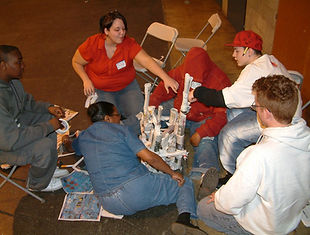
With support from United Way, the first LeaderSpark inter-generational neighborhood program is offered at South Side Settlement House. The curriculum is extended to 24 hours, with a greater emphasis on hands-on application.

2009

LeaderSpark becomes a United Way Agency and joins the Ohio Association of Nonprofit Organizations (OANO).
Columbus City Schools endorses the curriculum and LeaderSpark partnerships with the schools is expanded.
2010
Inter-Generational LeaderSpark programs are expanded in South Columbus, Franklinton and Weinland Park. This is supported by grants from United Way of Central Ohio, JP Morgan Chase and The Columbus Foundation.
Multicultural programs are also expanded to include partnerships with the Ethiopian Social Service Agency (Ethiopian, Somali and other Pan-African populations) and Kaleidoscope Youth Center.


2011


LeaderSpark continued to build coalitions with schools, communities and organizations to support and empower emerging leaders. This includes partnerships with the Columbus City and Groveport-Madison School Districts.
In March, LeaderSpark announced a new partnership with Starbucks to train youth and adults in leadership skills and promote neighborhood, community and global engagement through project-driven activities.
LeaderSpark also took a larger role in anti-bullying programs with its Speak Up! initiative. Click Here to learn more.
2012

LeaderSpark continues to build coalitions with schools, communities and organizations to support and empower emerging leaders.
In 2012, we plan to expand programs and formats to deliver project-based skills training to more urban, low-income populations, multicultural new Americans, and inter-generational groups.
LeaderSpark became accredited through the National Society For Youth Leadership. We are working toward further accreditation to make a greater impact through incorporating the best practices of other youth leadership development organizations.
2013
125 low-income youth, as part of grant-supported Summer Employability Programs, participated in LeaderSpark project-based curriculum to learn employability skills. Multicultural programs, focused on “New Americans” from Africa and Asia, participated in LeaderSpark programs. New partnerships were formed with community-based organizations.) Starbucks continued to provide employees (partners) to help with LeaderSpark session on “interviewing for a job” and in youth-led community service projects.